
....

443 Queen Street

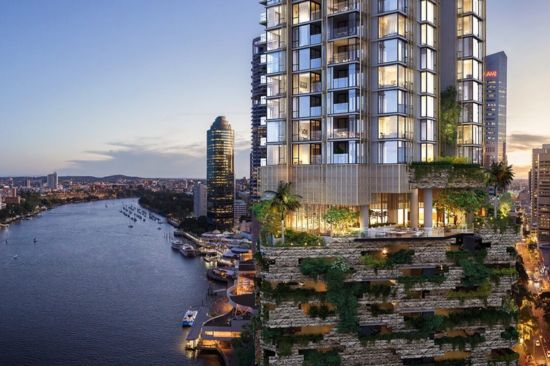
443 Queen Street is a landmark residential tower developed by Cbus Property in Brisbane’s CBD. Completed in 2023, the 47-storey building comprises 264 apartments and is Australia’s first residential project to achieve a 6 Star Green Star rating from the Green Building Council of Australia, demonstrating its commitment to sustainability and innovative design.

Designed collaboratively by Singapore-based WOHA and Brisbane’s Architectus, the tower embodies subtropical architectural principles. Features include open-air corridors, cross-ventilation, and extensive greenery, creating a ‘breathing’ building that responds to Brisbane’s climate. The structure offers panoramic views of the Brisbane River, Story Bridge, and Kangaroo Point, enhancing its appeal.

Amenities include a riverside recreation deck with a 25-metre infinity pool, gym, private dining room, and outdoor lounge areas. The ground level hosts a restaurant and café, integrating the development with the city’s vibrant riverside precinct.

443 Queen Street has received accolades from the Council on Tall Buildings and Urban Habitat, winning Best Tall Building by Height (100–199 metres) and Best Tall Building by Region (Oceania) in 2024. The project exemplifies the fusion of sustainable design and luxury living, setting a new benchmark for residential developments in Brisbane.

The Challenges

  • Open-air and naturally ventilated design: The subtropical design, with open-air corridors and cross-ventilation, required careful fire and smoke control strategies, particularly around compartmentation and smoke hazard management.
  • Vertical integration of green spaces: Extensive greenery and external planters increased potential combustible loads and presented challenges in maintaining clear egress paths and limiting vertical fire spread.
  • Mixed-use integration at ground level: Restaurants and cafés at the base of the tower introduced risks related to kitchen exhaust systems, fire separation, and access requirements for multiple tenancies.
  • High-rise evacuation complexity: The 47-storey height necessitated enhanced evacuation strategies, including occupant mobility considerations, stair pressurisation, and fire brigade intervention access within a climate-responsive building envelope.


Bloom’s Impact

  • Enhanced passive design for fire safety: Bloom leveraged the naturally ventilated façade to reduce reliance on complex mechanical smoke extraction in common areas, improving resilience and reducing energy consumption.
  • Efficient compartmentation strategies: A bespoke fire separation strategy, integrating glazing and sprinklers, enabled the open design vision without compromising safety.
  • Fire service access optimisation: Early collaboration with fire authorities allowed tailored fire appliance access despite the constrained CBD site and rationalised fire hydrant performance in line with the compartmentation strategy.
  • Sustainable compliance with high ratings: Achieving a 6 Star Green Star rating demonstrated the successful integration of advanced fire safety solutions with environmental performance, reflecting modern engineering standards.